Though Albert DeSalvo confessed to murdering 13 women in the early 1960s, some believe that the "Boston Strangler"

Though Albert DeSalvo confessed to murdering 13 women in the early 1960s, some believe that the "Boston Strangler" was really multiple serial killers.
On July 8, 1962, readers of the Sunday edition of the Boston Herald opened their papers to a shocking headline: “Mad Strangler Kills Four Women in Boston.”
The article warned that a “mad strangler is loose in Boston” who has “slain four women during the past month.” Several women in the greater Boston area called the police in a panic, saying a man claiming to be “The Strangler” had called their homes to tell them “You will be next.”
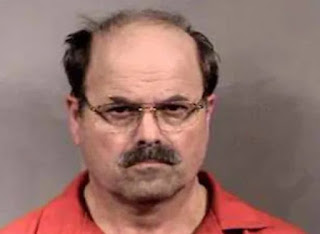
Getty ImagesSelf-confessed Boston Strangler Albert DeSalvo stands in jail for an unrelated crime.
Boston already had cause to panic. But it couldn’t predict just how bad things would get. The “Mad Strangler” — also dubbed a “Phantom Fiend” and “Phantom Strangler” by the local press — wasn’t done yet. Between June of 1962 and January of 1964, 13 women would turn up dead, allegedly at the hands of the same culprit.
One man named Albert DeSalvo eventually confessed to all 13 murders, and many assumed the investigation was complete. But the truth of the man’s confession has been disputed for decades.
Was there really only one Boston Strangler? Or were the 13 killings the work of more than one murderer?
The Boston Strangler’s Crimes
The victims of the Boston Strangler were all single women, but their profiles were quite different otherwise. One was just 19 years old, while the oldest victim was 85. Some lived in Boston, but others lived miles north in Salem, Lynn, and Lawrence. They were students and seamstresses, widows and divorcées.
Getty ImagesThese file photos show eight of the victims of the Boston Strangler. The women are (upper L to lower R): Rachel Lazarus, Helen E. Blake, Ida Irga, Mrs. J. Delaney, Patricia Bissette, Daniela M. Saunders, Mary A. Sullivan, Mrs. Israel Goldberg.
From the start, police theorized that likely one person committed the crimes.
So many aspects of the crimes pointed to a single modus operandi: The women were almost invariably raped and strangled, usually with nylon stockings. Many were killed in the middle of the day. The victims would be lying naked on top of their bedcovers for the police to find.
Oddly, the Strangler didn’t appear to have broken into any of the victims’ homes. That led police to believe that the women had known their attacker. More likely, the women had believed that he was someone they could trust or had expected to arrive. The perpetrator may have dressed up as a repairman or delivery person.
The Next Chapter
Though the public referred to the mysterious culprit as the Boston Strangler, a fair amount of the crimes took place outside the Boston city limits.
This complicated things for the Boston police, as well as Suffolk County prosecutors. Massachusetts Attorney General Edward Brooke, who later became the first African-American to be popularly elected to the U.S. Senate, stepped in to coordinate police efforts.
Bettmann/Getty ImagesPolice check a roof near the Boston apartment where 19-year-old Mary Sullivan was found strangled to death. She was the Boston Strangler’s thirteenth victim. January 4, 1964.
Months went by, thousands of suspects were interviewed, and the police — and the public — were desperate for a breakthrough.
At the request of a group of private citizens who volunteered to pay the expenses, the police enlisted the help of Peter Hurkos, a Dutchman who claimed to possess extrasensory perception, or ESP. In a prepared statement, Brooke called Hurkos’s talent “psychometry.”
Hurkos — who also lent his services to the Manson Family murders investigation — looked at crime scene photographs, declared that all of the murders were perpetrated by the same individual, and even pointed police to one suspect. Police took that suspect into custody but found that he was too mentally deranged to stand trial.
In the meantime, women in Boston made sure to lock their doors. They bought chains, deadbolts, and pepper spray. Police stations were inundated with calls from women who received unwelcome knocks on their doors or suspicious phone calls. Some even moved out of the city.
“What do you do about the door when you enter?” one woman asked The Atlantic:
“You look in the closets, under the bed, and in the bathroom. If a man is in there you want to be able to run out, screaming for help. Therefore, you should leave the door open. But if you leave the door open while you are making a search, what is to prevent the Strangler from following you in and standing between you and your means of escape when you first see him? Do you enter the apartment,......
I appreciate you reading. Post your ideas in the space provided for comments below.
Read more on our Rare History Channel








Comments
Post a Comment